Friday, February 22, 2008

Singapore's national pride soars sky high


There was an irresistible urge for the pride of a nation that erupted into celebration when the city state of Singapore was announced on Thursday as winning the right to host the inaugural Youth Olympics in 2010. Singapore's Prime Minister Lee Hsien Loong called it a new era for Southeast Asian sport. Singapore beat the only other contender, Moscow, for the Games, which will have around 3,200 athletes, aged 14-18, competing in 26 sports.

It will be the first time that Singapore has hosted a multi-disciplinary sporting event of such a magnitude. “It is a great honour and privilege for all of us,” said Prime Minister Lee in front of thousands of cheering supporters wearing red and white, the colours of the national flag.

Singapore is a real-life working model of Olympic values in practice, said Minister for Community Development, Youth and Sports, Dr Vivian Balakrishnan who also launched the Junior Reach Ambassadors' programme. The Junior Reach Ambassadors' programme is a part of the restructured Feedback Unit to gather feedback from various groups of Singapore. “By choosing Singapore, the IOC (International Olympic Council) has declared that it is possible for small young cities like Singapore to host the Olympic movement,” he said.

Singapore with a population of 4.6 million has played its size-is-not-everything card to perfection. Now the hard work beyond the huge buzz has begun in earnest to make the event a success.

Singapore is the wealthiest nation in Asia ex-Japan, with a 2006 Gross Domestic Product of about $29,000 per capita, on par with G-7 member Italy.

Wednesday, February 20, 2008

The elderly to get axed first

While most of the capitalistic world celebrates workers day on May 1, in Maldives the Government employees aged 65 and older will be forced to retire on the same day, when the Civil Service Act comes into effect.

While streamlining the bloated and inefficient civil service structure is necessary, the layoffs for older workers come even while there is no pension provisions in place for them. Thus the changes will come hard on a vulnerable segment of our society who are understandably nervous especially because no other opportunity exists for any alternative gainful work.

These forcibly retired civil servants will be completely dissolutioned when they realise that for politicians, the same standard is not applied. This is a debatable point which ought to be debated in parliament to work out a similar retirement age for politicians as well. The political parties need to look into this in the interest of fairness.

As usual our Government, the opposition political parties in parliament and the civil service commission are targeting the older workers first- the soft targets that can be pushed over into despair without the rancour which will come with aged politicians serving their own interest by remaining on public payroll.

As pointed out by the MMA governor Jihad, in addition to the failed monetary policy there is a growing income inequality among Maldivians, and he is calling for greater wealth redistribution through taxation. He believes the bill on business profit tax, currently awaiting parliamentary consideration, would be “a step in the right direction”, but questions whether there is the “political willpower” to pass the bill in an election year.

Thus, without any regard to build a resilient community through financial security for retirement, the older workers are driven off like sheep to the slaughter house. Maldives is a country that has an expatriate population of 65,000 foreign workers. Surely some of our older workers can be retrained to stretch their work potential and create innovative work opportunities to fit younger workers or replace expatriate labour where Maldivians can be given the training and incentives to step in to the job.

Beyond the benefit of the pension the older workers will get, the Government will need to also provide targeted assistance to those of them who need help to adjust to the increased cost of living conditions.

Our economy needs to be restructured. We should provide a full range of education and training for people to take up work opportunities in the hospitality industry and other indutries like fishing, agriculture and retail business. To spur the growth of innovative enterprises, our Government should provide adequate incentives for people to create new ideas and products. We have the resources and the capacity to achieve these results if the politicians can find the will to do so.

Saturday, February 16, 2008

A crisis of confidence

The Governor of Maldives Monetory Authority Mr. Abdulla Jihad revealed Thursday what many Maldivians knew for a long time. The Maldivian tourist resort owners are keeping their finance outside Maldives and they do it for two reasons.

1) They get better benefits abroad, and
2) Lack of confidence in the Maldives financial system.

In a country that does not have an income tax system, the Maldivian business elites have always enjoyed an unfair advantage over the rest of the population.

Much of the industrial world follows Adam Smith's free market capitalistic theory espoused in 'The Wealth of the Nations' that rests on his explanation of how rational self-interest in a free-market economy leads to economic well-being. Such free markets without certain checks and balances have the tendency to concentrate wealth in the hands of the few as we have seen through out the world, including Maldives. Thus checks and balances are necessary if it is to provide a reasonably equitable distribution of wealth. The fundamentals of economics haven't changed, yet in the face of clear evidence of a growing gap between rich and poor, and with no hope of an escape from poverty for millions of people worldwide, we cannot willingly accept the argument that the economy is best left to market forces.

The maximum amount of wealth of a nation lies in the wealth of its people, everything that the mass of people have. Therefore, it is necessary to structure the economy from the perpective of the consumers. It is important to balance the income gap without giving undue priviledges to the business elites at the expense of the rest of society most of whom are struggling to meet daily demands of life.

Forcing more competition in the supermarkets

Supermarkets in UK could be forced to sell land to allow rivals to open in areas where there is not enough competition.

The United Kingdom is dominated by four supermarkets, Tesco, Asda, Sainsbury’s and Morrisons that control 75 percent of the market share of the 120 billion pounds grocery market.

The Competition Commission, the industry watchdog has recommended a new “competition test” under which authorities would have to take account of how many outlets a supermarket already has in a particular area.

Other measures included the creation of a new independent ombudsman or ‘shopping czar’ to oversee a code of practice between supermarkets and their suppliers.

The regulator wants an ombudsman to protect food suppliers against any dispute with the four major supermarkets.

More on BBC Business News.

Thursday, February 14, 2008

A touching goodbye

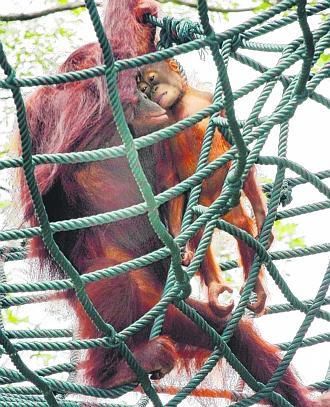
Tragedy struck the Singapore zoo's primates a second time in a week, when a young female orang utan died of a dislocated neck in a freak accident yesterday. At mid-day, Atina, aged two-and-a-half years, caught her neck in a hanging noose, which was part of a hammock in the apes' enclosure.

Her mother Anita and other orang utans, in their haste to free her, tugged at her neck, dislocating it. She died instantly, said a zoo spokesman. Zookeepers could not reach Atina on time because her mother kept pushing them away.

The tragedy comes less than a week after Ah Meng, Singapore's famous orang utan died of old age. Ah Meng has appeared in more than 30 travel films and was the only non-human to receive a special award from the Singapore Tourism Board in recognition for her contribution towards tourism in Singapore.

Wednesday, February 13, 2008

Concern over increasing sex crimes

Ministry of Justice has amended sentencing guidelines on Monday to jail sex offenders instead of banishment after facing public outrage and criticism from rights groups who were enraged that four men who raped an under-aged girl were sentenced to two years banishment.

The mandatory prison sentencing for sex predators comes about at a time when the number of sexual crimes has increased in recent years. It is felt that evidence of such crimes that may have gone unreported in the past is now being brought to light because of public awareness.

In the international community, it has been commonly assumed that sexual disorders leading to various sexual crimes are caused by some kind of mental illness. While researchers are attempting to answer causes of perverted and sadistic behaviour that leads to heinous sexual offences, every society will need to work its own method to deal with deviant sexual behaviour and sexual offences with punishments that will include treatment of the repressed conditions.

If Maldives doesn't have the mental health experts to undertake such treatment immediately, we have to start asking the hard questions in order to find out what is going wrong with our society. In a close-knit society like Maldives with a 100 per cent Muslim population, why are we seeing gang rape of young girls?

Monday, February 11, 2008

Smoking will kill 1 billion people


One billion people will die from tobacco-related causes by the end of the century if current consumption trends continue, according to a global report released Thursday by the World Health Organization (WHO).

Read more here.

WHO report has outlined six tobacco control policies. It calls it MPOWER: They are:
1)Monitor tobacco use and prevention policies
2)Protect people from tobacco smoke
3)Offer help to quit tobacco use
4)Warn about the dangers of tobacco
5)Enforce bans on tobacco advertising, promotion and sponsorship
6)Raise taxes on tobacco

The report also breaks down tobacco consumption and prevention efforts country by country.

Sunday, February 10, 2008

What happened to the rights of 'Vakarugay Kudhin'?

An artice on haveeru online reads,"Increasing vakrugay kudhin in Maldives." Vakarugay kudhin is a derogatory term referring to children who were naughty, indisciplined and did not go to school. Haveeru article writes about a 14-year old boy who dropped out from primary 5 and is now lurking around the streets in Male looking for work. The boy says his parents know what he is doing. There are many more kids like him loitering around in Male and in other islands. These kids are not only wasting their time but often they get invovled in gang fights. Where are the parents? And why has the state abdicated its responsibility to provide opportunities for their education?

In a speech given to the special session of UN general assembly, an important point was made by our Minister of Women's Affairs. "Although we have never had gross violations of child rights in the Maldives, the CRC (convention on the rights of the child) has brought to our attention issues that need to be systematically addressed if the rights of all children are to be fulfilled. In fact. it has provided us with a yardstick against which our progress can be measured."

If what is reported on Haveeru is accurate, then the Minister's statement to the UN is false. There are gross violations of the rights of children in Maldives and it is appalling that our politicians are trying to gloss over and paint a rosy picture to the international community. Since Maldives has signed the UN convention on rights of the child in 1990 and ratified it in 1991, what steps have been taken to protect children and provide them with the nurtering environment they need. United Nations Children's Fund or UNICEF plays an important role in supporting the government to achieve better childcare and development. So we have plenty of help available to avoid the situation we are facing. Our country is rich enough to provide good healthcare and education to our children and it is a gross violation of their rights when they are deprived the basic necessities.

Tuesday, February 05, 2008

Appeasing the trouble makers

Male’ Municipality is opening up the artificial beach for entertainment. Municipality has said that necessary permits will be given upon registration of interest at the General Services Section of Municipality. Municipality further revealed that events are to be held during week end nights.

In a flash of inspiration, Municipalty has realised that violence and criminal activities in the jam-packed Male' is due to lack of entertainment especially during the weekends. Municipality notes many young people are seen mindlessly wandering around during night time.

Few years back, there were music shows staged during weekends at an open space in Maafannu. The young revelled while the neighbours found the music blast too loud to bear.

The strength of the Maldivian entertainment industry is anchored in the natural talent of artists such as singers and live bands. Concerts that feature both local and international talent can attract individuals from all socioeconomic classes. In order to promote arts and cultural activities, governmnet can offer various incentives to artists.

Sunday, February 03, 2008

Lock up the child rapists

The case of gang raping a child in Kurendhoo which happened recently has been widely reported in Maldives. The rapists were first handed an eight month banishment which was increased to two years banishing and fifteen lashes of whipping by a higher court. The Human Rights Commission has criticised the banishment of the convicted individuals, as they will have a negative influence on the communities they are banished to.

This is a very disturbing story with profound consequences for families living in very small communities. In the recent past people who were charged with drug related offences were sent to various islands where they continued the drug habits and introduced it to the island community as well. Now we have a ready market for consumption of drugs across all the islands.

Gang rape is considered a very serious offence and the convicted individuals should be given lenghty prison sentences and professional counselling, so that when they eventually come out they will control the mad fantasies and be productive citizens. It is time for legislators to revise the sentencing guidelines.

Saturday, February 02, 2008

Liberal imam assaulted

Dr.Afraasheem escaped unhurt with police protection when a group of men assaulted him outside the mosque where he led the Friday prayer.

Is Afraasheem being attacked by the radical conservatives because of his liberal views? Where has the tolerance and respect of peace-loving Muslims gone?

This also proves that our Government and Mathee Majlis are not only inapt but they have demagogued our religion as well.

Friday, February 01, 2008

A pilgrimage for humanity

A British man has started a walk to India without using money, relying on the goodwill of people along the way or working for bed and board, he said Wednesday.

Former dotcom businessman Mark Boyle, from Bristol, aims to end up at Mahatma Gandhi's birthplace after the 9,000-mile trek, which he reckons will take him about two and a half years.

"I've got some sunscreen, a good knife, a spoon, a bandage... no Visa card, no travellers' cheques, no bank accounts, zero. I won't actually touch money along the way," the 28-year-old told BBC radio.

Walking between 15 and 45 miles a day, he plans to work his way down through France, Italy, eastern Europe, Iran, Afghanistan and Pakistan before reaching Gandhi's birthplace of Porbandar on India's west coast.

Boyle describes himself as a 'freeeconomist'- a movement which began in United States and aims to create a moneyless society. On his blog, Boyle said he will also account for how it feels physically, emotionally, mentally and spiritually to walk to India - the highs and the lows, the good days, the non-so-apparently good days and the days when he is on the edge of despair!

Saturday, January 26, 2008

Do we really respect the dead?

Despite all the great changes that have occurred in the world in technology and communication, the process of showing respect to the deceased has remained the same. It has been said that one can measure how civilized a culture is by the way its dead are treated.

According to this news article, quite a number of human bones had been discovered in a private residence near the Maffannu Cemetery, Male'.

Thursday, January 24, 2008

Paulo Coelho seeks questions

International best selling novelist Paulo Coelho whose books include 'The Alchemist' wants your questions. A video clip of Paulo Coelho's request from the World Economic Forum is below.


To answer the Davos Question go to: http://www.youtube.com/davos Paulo Coelho's YouTube channel is here: http://www.youtube.com/paulabraconn~

Transcript: "For these past ten years I've been participating in the World Economic Forum in Davos. As a writer, as a human being I think that everybody in the world is committed to improve the state of the world. Therefore during this year we would like to have your question, your thoughts. How can we, as a society, meaning everybody, really improve the situation of the world. Please upload your answer to http://www.youtube.com/davos."

Tuesday, January 22, 2008

Starting to look like a recession

Financial news papers around the world have started reporting about Monday's Asian stock market plunge, recalling memories of the September 11, 2001 terrorist attacks when the stock markets took a steep nose dive.

Financial Times reports that the Indian shares sank more than 11 per cent as the market opened Tuesday, resulting in a one-hour trading suspension. Hong Kong was on track for its worst two-day fall since the aftermath of the 1997-98 Asian financial crisis.

Australia’s S&P/ASX 200 recorded its biggest fall since the index was launched in 2000, closing 7.1 per cent lower.

The Asian market losses followed on from Europe’s declines on Monday, and a fall in New York futures suggested no respite for US equities when markets reopen later after Monday’s holiday- Martin Luther remembrance day.

In a recession consumers will have less spending power and the leisure and travel industry will be adversely affected.

What effect will such recessionary pressures have on the Maldivian economy? Maldives is heavily dependent on foreign tourism, and the gloom in the global economic horizon will have a negative impact on our tourism.

Hopefully, our politicians will devote enough time to manage the economy while they wrestle to institute a democratic form of government in Maldives.

Monday, January 21, 2008

The price of social apathy!!!

Source: jazeera.com

Have we lost the potential to think beyond the boundaries of materialism? Do we no longer care more for the people than for the dollar? Or is this an unfortunate accident and there is no need to look for answers beyond that.

These words may sound hollow in a world controlled by elitist groups who thrive in chaos.

Friday, January 18, 2008

Calling for Ideological Debates

The campaign for the presidential election in Maldives is gaining momentum and is largely driven one factor: the removal of the incumbent president who has declared his intention to seek re-election under the new constitution which limits the president's tenure to two terms. The opposition's campaign is cluttered with vitriol against the president who is completing his 6th five-year term. There is a manic frenzy by the opposition in the special majlis to push this particular agenda while amending the constitution, now in its last stage. Who ever contests for the presidency will have to put up with the rigors of political skulduggery. The issues of health care, education, housing, drug addiction, religious extremism and increasing gang violence that plague our country are drowned out by the political madness that has gripped the political parties.

Political parties are funded by public money and therefore they have a responsibility to educate and explain their policies in public forums on how to deal with these problems.

If the political campaigns are only based on personalities, the critical issues of the country will be left out. The road circus that the public was treated to when former president Ibrahim Nasir resigned nearly 30 years back will not be the most civilized and productive way to address grievances or to resolve conflicts. Long before Maldives engaged the world's top PR company Hill and Knowlton, our country was using its own equally clever PR masters and spin doctors. They used hypocrisy and deception with devastating effect to rob our civil rights and destroy our unity. The public is only now waking up from the insecurities and mind-controlling servitude that they introduced.

Though we claim to be a 100 per cent Muslim country, our true faith has always been missing. Our leaders are compromising good with evil which never pays in the end. Materialism is the guiding force that motivates us in life. This has resulted in a society that lacks care and empathy towards the less fortunate, --- a society with profound struggles for those living at the lower end of society.

It is a crying shame that our economic development has only enriched the economic and political elites while completely neglecting the interest of the common man for so long.

It is time to claim back our human rights and civil rights from the politicians who have exploited us. We cannot allow our future generations to be doomed. We should challenge the preachers who act out with holier-than-thou attitude and do not practise what they preach. Our system needs changing and politicians should not confuse people of what the real issues are. They should lock in ideological debates with political opponents but must stick to the issues so that solutions can be found for the future. No system causes problems, it is people within the system who cause them.

We are now at a turning point in our history- for good or for worse.

Sunday, January 13, 2008

Financial success has left the elderly neglected

Medical experts expressing their views in a seminar, as reported here have put the blame on changes in the Maldivian lifestyle which has led to widespread neglect of the elderly.

The director of local organisation Maldives Centre of Ageing (MCA), which organised the event, urged the Government to “strengthen the law” and “hold abusive family members to account”.

The Government is drafting a new policy to protect the country’s older citizens, as it always does from eradicating drugs to controlling violence.

This is an incredible situation in Maldives, a country that insists it must remain a 100 per cent Muslim country. Islam is a religion that calls for respect and care for parents and the elderly.

We tend to forget that the way we treat our parents, our children will treat us in the same fashion, because that's the role model we are presenting to them. "As you sow, so shall you reap."

Though the number of these cases may not be very high, the fact that such abuses do exist and continue to increase is an alarming social problem.

These elderly persons have raised children and contributed to society and deserve to live out their sunset years in dignity. It is up to their family to look after them with all their physical and mental deficiencies. The state should provide help and the support to the care givers who sometimes face very difficult predicaments. Maldives is rich enough to be able to look after the elderly without them becoming a burden on their families and society. While laws are necessary, the starting point is that we have to open up our hearts and become a caring society. Unless we do it out of love and compassion, no amount of laws can solve this problem.

Saturday, January 12, 2008

Virtual help for students

Harvard University computer science professor David Malan is providing "virtual office hours," allowing students to chat via text or microphone in live, online help sessions.

The professor who teaches 100 students says, "It's especially convenient if they're in their dorm, at Starbucks or on vacation. They can get help without physically making their way to the office. And it allows instructors to pop in at 11 p.m. or 1 a.m. … It's not feasible for us to be on campus at that time."

Malan is one of a growing number of professors in the United States turning to Internet technology to enhance course communication and connect with students.


Some faculty also use Facebook, the social-networking site, to post material or learn students' names.

Chad Rector, an assistant professor at George Washington University, uses Facebook to reconnect with former political science students. A "group" he created in October has nearly 100 members, who can send messages and post links, photos and videos.

"My idea is that I'll take questions from students about current events and answer them in a three- to five-minute video that refers back to ideas from the course," Rector says.

Friday, January 11, 2008

Grappling with health care

In United States, health care was the largest industry in 2006. It provided 14 million jobs—13.6 million jobs for wage and salary workers and about 438,000 jobs for the self-employed.

The U.S. is one of the world's few industrialized nations that does not guarantee access to health care. In the United States, around 84% of citizens have health insurance, either through their employer (60%), purchased individually (9%), or provided by government programs.

The US health care has now turned out to be a dysfunctional mess. About 45 million people do not have health insurance as they don't have the funds to pay the premiums. There is a growing consensus in America that time has come for a change to move away from the special interest groups like the insurance companies and drug companies who influence public policy.

On the presidential campaign trail Democratic contenders (shown in the video below) have spoken about introducing universal health care plans focusing on cutting costs via better access to preventive medicine.

Tuesday, January 08, 2008

The evil behind the ego


  • What happens to one of us, affects all of us since we are a small society.

What is true here that we are a small society. Our Capital Male', a 2 square km island has the most dense human population on the planet with 70,000. But what happens to one of us hardly has any bearing for the rest of us because the rest of us including our leaders and the Government continues with a business as usual attitude. The recent mob killing in Male' , increasing gang violence over the years and the alarming heroin addiction among our youth in Maldives is proof of this statement.


  • We have always been a moderate nation.

The truth on this one is we have never been a moderate nation. We don't allow non-Muslims to practise their faith openly.

These are just a few of the empty cliches that shackle our society.

Monday, January 07, 2008

Bill Gates predicts

Microsoft founder and Chairman Bill Gates has offered his take on the future of PCs. He says that people will see a sea change in the way they interact with computers in the coming five years.


Three years ago he spoke about the idea of the digital lifestyle. That our music, photos, TV, and communications would all be very different. And over these last three years it is really coming into the mainstream.


In a just released interview with BBC he is quoted as saying "this whole idea of what I call natural user interface is really redefining the experience."

"We're adding the ability to touch and directly manipulate, we're adding vision so the computer can see what you're doing, we're adding the pen, we're adding speech," he added.

Gates unveiled the Microsoft Surface computer, a large table like machine with a multi-touch interface, during the interview.

Sunday, January 06, 2008

Who cares for public interest?

Following the events after the brutal death of Evan Naseem in 2003 and under intense international pressure, the Maldivian Government was forced to undertake political reforms including the establishment of an independent judiciary and supreme court, and the setting up of a human rights commission. While the government has been largely reacting to events since then, the people of deprived islands have taken the law into their own hands. The people of Dhidhoo threw their fish into the government office when the collector vessel could not buy their catch. Since then it has become a common practise to force closure of offices in the islands or shut down the power generator until their demands are met. Things are going from bad to worse.

After the Human Rights Commission was set up 0n 10 October 2003, one more channel opened up to Maldivians to mount pressure on the Government to carry out the promised reforms.


While Maldives is still struggling to recover from the 2004 Indian Ocean tsunami, our politicians are now preoccupied in the democratic process to build independent institutions for political governance. The public chase has intensified on the government that has a record of making bold statements and a very poor record of delivering them.

Efforts to eradicate drugs and treat addicts from drug addiction, a national epidemic among younger generation is a glaring example.

With the eyes of the world on Maldives, in June 2004 a special majlis, or parliament, was convened to consider changes in the constitution, including the legalization of political parties to bring democracy to the country.

What emerged from the special majlis over the next three years to revise a document that took 17 years to make has found several conspiracy theories. Some of them would include that government MP's deliberately fail to turn up to several meetings that were cancelled due to lack of quorum or the switching of unexpected political allegiances and affecting the voting patterns without any regard to public interest. All these makes the constitution of Maldives appear to be the worst enemy of the ordinary people of Maldives, the vast majority of whom make up the total of of 300,000 Muslims. The current constitution that some politicians praised as a world-class legal document turns out to have deprived the people of their rights and stands against good governance.


What an ominous misadventure the Maldivian constitution has been made out to be!!!


Tourism is the main industry, contributing almost 20 percent to the GDP. Fisheries and trade follow close behind.Tourism, Maldives' largest industry, accounts for 28% of GDP and more than 60% of the Maldives' foreign exchange receipts. Over 90% of government tax revenue comes from import duties and tourism-related taxes. Fishing, agriculture and manufacturing play a lesser role in the economy.

The wealthy elites resident in Male' benefit from tourism disproportionately because the country does not have an income tax system.

Significant challenges still lie ahead in order to comply with democracy and good governance such as building up independent institutions in a country that does not have a civic culture or the political discipline to make speedy progress. Promises of structural development and creating employment are undertaken, usually around election time.

There is more to democratic systems than simply structures and formal institutions. From the creation of democratic institutions, it is necessary that a political culture that supports democratic ideals also emerge. We are in testing times and have a long way to go.

Saturday, January 05, 2008

Socialism is not achievable

India is the world's twelfth largest economy and the economic reforms introduced in the 1990s have transformed this subcontinent of 1 billion people into the second fastest growing economy in the world.

India is also the largest democracy in the world. India is a federal republic which has twenty-eight states. The state of West Bengal is one of them. West Bengal is the hotbed of the Indian independence movement. Since independence in 1947, the state has for decades supported the Marxist communist ideology followed by the Communist Party of India- CPI (M). Its impoverishing economic effects have been widely felt in the state.

Aging CPI(M) patriarch Jyoti Basu, 93, today said he supports West Bengal Chief Minister Buddhadeb Bhattacharjee's stand on capitalism, and it is needed to industrialise the state. "Socialism is not achievable at this point of time. We have been working within the capitalist system and as such private capital has to be used while social welfare programmes by the state government would continue," Basu told reporters in response to a question after attending a meeting of the party's state secretariat. "Socialism is a far cry. Socialism is our political agenda and it was mentioned in our party document but capitalism will continue to be the compulsion for the future", the CPI(M) politburo member said.

Source: Headlines India- January 05, 2008

India reduces import duty on 4800 items from SAARC

India has scrapped import duty on more than 4,800 items from four neighbouring countries and reduced customs tariff on these products from Pakistan and Sri Lanka as part of efforts to boost trade in South Asia.

"The import duty has been reduced from 16-40 per cent to zero level on items like meat, fish, milk, dairy products, and dry fruits from the neighbouring least developing countries (LDCs) - Bangladesh, Nepal, Bhutan and Maldives," a finance ministry official said.

However, the duty rates on these items have been reduced to 12-20 per cent on goods imported from Pakistan and Sri Lanka. The new rates come into effect from January 1.

Source: Indiabiznews, 05 january 2008

Thursday, January 03, 2008

Sleazy sex : Story of the year for Malaysians

It was only the second day into the New Year and probably Malaysians have got the story of the year.

Malaysia's health minister quit his post yesterday after a sex scandal in which he featured in two pornographic videos where he was shown with a woman he described as a "personal friend".

Datuk Seri Dr Chua Soi Lek, 60, quit all his government and political posts because Malaysians wanted him to do so after he admitted being the man in the sex DVD.

The drama had unfolded on the morning of New Year’s Eve when Dr Chua took his wife to meet the Prime Minister and admitted he was the man in the sex DVD. Rumors had already been circulating in Dr. Chua's Johor sate about the sleazy sex video tape.

Those who know the outspoken Johor politician were not surprised by his decision. He has always taken the bull by the horns and his public confession was classic Chua Soi Lek.

A man who does not mince his words, Dr Chua gained the respect of those who dealt with him. Many people consider him the best health minister Malaysia had.

Malaysians expect their leaders to keep to higher standards of conduct and it appears they are not prepared to forgive the moral failings of their elected leaders.

By his resignation, Dr Chua Soi Lek made the right decision to take responsibility for his actions and set a precedent for other politicians.

Tuesday, January 01, 2008

Rising religious tension

One of the biggest dangers that Maldives will face in the future will be religious intolerance within its own community.

Last Friday a number of Maldivians left a mosque in Male' when they knew that Dr. Afrashim Ali was to recite the sermon and lead the prayer.

While everyone has right to go to any any mosque they like, the refusal to be led by a particular Imam raises serious questions. To the liberal Muslims, those who refuse to be led by Dr. Afrashim who holds liberal views including on music that has aroused controversy will be seen as radical conservatives.

We have already seen the consequences of the religious divide in Hinmadhoo and Male' where a group of people followed an uncompromising separatist view of practising Islam.

Maldives is one of the most intolerant countries in the world, in terms of religion. The Maldivian government will have to decide on Imams that will be acceptable to all, and if that cannot be achieved they may have to have dedicated mosques for different Imams. We will then be practising divide and rule at its best.

Tolerance of religious differences must taught in schools and practised in the country by politicians if the people of our country are to live in peaceful co-existence.

Sunday, December 30, 2007

Sombre economic predictions for 2008

Some economists predict that the U.S. economy will slide into recession next year. The outlook is the gloomiest in years and the World economy will take a hard hit if the world's largest economy goes into a recession.

The U.S. Federal Reserve has cut interest rates three times since September, lowering its benchmark rate to 4.25 percent. Economists expect the Fed to keep cutting, dropping the rate to as low as 3 percent by midyear, which would be the lowest since May 2005. That should help the economy because lower interest rates encourage consumer and business spending by lowering borrowing costs.

The U.S. economy is expected to be most vulnerable in the first half 2008, when growth is so slow that even a mild shock, like another surge in oil prices, could push it into recession.

Click below to listen to the United States presidential candidate Dr.Ron Paul discuss economic and currency issues.

Saturday, December 29, 2007

An unislamic silence

These are early signs of going overboard.

In an MDP meeting recently, this is what President of MDP’s Consultative Council on Islamic Affairs Adam Naseem has said as reported on Miadhu.

Quote. "Speaking at the gathering Sheikh Adam Naseem noted that many of the customary practices practiced currently are alien to Islam and are imported to our modern culture from other religions. He said such acts as “holding a moment of silence” was unIslamic and as such, such a moment will not be held in memory of Late Saleem." Unquote.

Following this nitpicking logic, our country will have to start a national house cleaning exercise to weed out unislamic elements if the conservatives have their way. With increasing influence of the religious parties in Maldives, the politics that gets played out could mirror the political chaos that is happening in Pakistan. The politics is not based on issues, instead it is based on keeping personalities in power.

The tragic death of former prime minister and opposition leader Benazir Bhutto in Pakistan is a stark reminder of the gruesome reality of imposing twisted notions of religion in political governance. There are some hard-line radical clerics who believe that Benazir Bhutto was too much of a liberal who supported US in their fight against terror and therefore she must be eliminated. While it may be unseemly to talk about benefiting from a person's death, her death is another chance for the world to realise that dictators and clerics who oppress their people using religion can never deliver peace and no one is safe, for they only create conflict within society.

Islam is a religion of peace. It respects and calls for individual rights, liberty and justice for all. But a country like Maldives which claims to be a 100 per cent Muslim country does not care about individual rights or equitable distribution of wealth to allow its citizens such respect and proper living conditions.

In Maldives, our clerics need to keep their focus and address major issues such as education, housing, health care, employment, drug addiction, equitable distribution of wealth, and social justice. These are the critical issues for our society. Our status as Muslims cannot change with a minute of silence.

Friday, December 28, 2007

Drawing inspiration from 'Room to Read'


Room to Read is a non-profit charitable organization founded by former Microsoft employee John Woodand based in San Francisco. It is dedicated to building education infrastructure in developing countries to end the cycle of poverty.

It all statrted in 1998, when John Wood, Microsoft’s director of business development for China, went on an eighteen-day trek through the Himalayas. He stopped for tea and met a headmaster from Bahundanda, Nepal, who invited him to visit his school. John found eighty kids crammed into classrooms for fifteen to twenty, and 450 children studying from cast-off Danielle Steele–type adult novels.

“Perhaps, sir, you could help us get more books?” the headmaster requested.

After returning from the trek, Wood managed to collect over 3,000 books from friends, acquaintances, and donors. He then returned with eight donkeys and delivered the books. In 2000, after a rough transition out of Microsoft, he founded Room to Read and is operating it to this day.

John Woods left a all-consuming lucrative job at Microsoft to follow the passion of his heart to donate books and build education infrastructure and he couldn't be happier to see the smiles on the children's faces.

Room to Read has created more than 2,000 schools and libraries for children across Asia. From his first trip to Nepal, where he was struck by the country's 70% illiteracy rate, through his courageous decision to leave Microsoft, to the logistics of growing and expanding the Room to Read initiative, Wood comes out as an honest and caring person.


The Room to Read's unique "adopt a project" form of donating, in which you are told how much money is needed to build a school/library/computer lab or award a scholarship and therefore know exactly what your money goes to, has met with considerable success. They have operations in many South and Southeast Asian countries, including Nepal, India, Vietnam, Cambodia, Laos, and Sri Lanka. They are currently expanding to Africa, with South Africa being their first country in that region.

Wednesday, December 26, 2007

No place to flee

The Maldives has fragile environment and our Environment Minister has said global warming is destroying coral reefs of the world and this is posing serious threats to economic and social development and survival of many countries. He said about 27% of coral reefs has already been lost and faster loss of coral reefs is inevitable unless global warming is tackled urgently.

We have a fragile democracy too, one that is just beginning to shape and is fraught with difficulties as the political parties remain polarized and jostling for power.

In December 2004, a major earthquake followed by a tsunami hit Asia and Africa, devastating many coastal areas. Almost 200,000 people in eight countries perished in a few hours, and over 100,000 are still missing.

According to the UN, the estimated cost of the Indian Ocean mechanism would be US$30 million (not including maintenance), a far cry from the billions in damage caused by last month's Asian tsunami disaster, and a worthwhile investment to avoid the massive human loss suffered by the affected countries.

The Meteorological Department in Male' informs that it has the capacity of sending an early warning signal to Maldivians before a tsunami or earth quake affects Maldives.

Following such a warning, where are our people to run to get away from the disaster even if they get few hour escape time? We live in such cramped living conditions, the government will have to come out with clear guidelines on where the people can escape before such disaster occurs. The easier part will be to to issue the warnings. The difficult part will be to educate the vulnerable communities and implement the evacuation plans by our Government departments.

Sunday, December 23, 2007

The row over music

Is music allowed in Islam?

Adaalat versus the Supreme Religious Council.

According to Miadhu, "In Dheenuge Magu, Shiekh Mohamed Rasheed has said that expressing joy, singing, beating drums, using tambourines and playing music on Eid days, wedding receptions and circumcision ceremonies are allowed within the boundaries of Islam.

“Mentioning the boundary, religious scholars have said that it has to be done in such a way that it does not put an obstacle in performing religious obligations, not in a way that it put obstacle in the work to do to feed your family, and in a way that bad actions are not included in a ceremony and that no bad words are not included in a song”

Sheikh Hussain Rasheed has said that there is no controversy among the scholars that singing without music and without bad words and love is allowed in Islam. But he said that the majority of eminent religious scholars agree that singing with all modern music instruments excluding tambourine are not allowed. "


Does this mean all the killer songs, the magnus opus of Hindi entertainment that drown our nation's radio and TV are unislamic? Does it mean Muslims should not watch them and our learned religious scholars failed to get this right?

Saturday, December 22, 2007

Beeratehin : Are they still around?

Beeratehin, were a culturally and intellectually inferior class of people who thrived in Maldives. There were seen as unintelligent. They were hard-working and they were exploited. Most importantly they were outsiders to Male', the Capital of Maldives where the superior people resided. Traditionally, a significant gap has existed between the elite living on Male and the remainder of the population inhabiting the outer islands, those atolls distant from Male where the Beeratehin harvested the seas to eke out a living.

These days we don't hear the word beeratehin, the word probably has been substituted by 'raajethere meehun' as the term is more politically correct.

So, have Beeratehin gone extinct?


Click here to read the meaning of 'beeratehi' as given on Radheef, the Maldivian dictionary.

Male, the traditional seat of the sultans and of the nobility, remains an elite society wielding political and economic power. Members of the several traditionally privileged ruling families; government, business, and religious leaders; professionals; and scholars are found here.

Since the monarchy was abolished, the facts about the aristocracy and ancient titles, offices and ranks have been forgotten. However Maldives still has the emotional trappings of a caste society. People are still very much class conscious and subservient to deep rooted nobility. Those who despised the old "beyfulhu" ways are the ones who are now interested in re-imposing the class system since they now see themselves as the "upper classe". They now use the upper-level of speech and address which they once condemned in the past.


Islam has been used to up hold the different caste-based traditions such as nobility and the clerics who portray them as holding a monopoly over morality, have cleverly used religious rhetoric to follow blind faith. Thus even though the term beeratehin is no longer used, they still serve at the pleasure of the elites.


A fundamental change in thinking is required in the interest of national unity. Ultimately, it is important that our leaders and people recognise that it is respect for basic democratic rights and human rights that will save us from the brink of barbarism.

Thursday, December 20, 2007

Global Warming : Spread the message


A High School Teacher's Web Video Is Among YouTube's Most Watched. Whether global warming is caused by humans or cows, climate change is a reality that affects all of us.

What action will Maldives need to take if the islands were to be wiped out?

Tuesday, December 18, 2007

Adversarial Politics

The formation of political parties and their involvement in the political process in Maldives has not helped to bring about an easier path to political reform that the country has embarked upon.
Most Maldivians now believe that a one-candidate, one-party system isn't in the spirit of democracy and isn't good for most of us. While we cannot expect perfection from political parties and candidates, we do want choices, and an honest exchange of ideas. Differences between political parties and office holders prevent secrets, and lead to public debate and ensure we hear both pros and cons on issues. This is the adversarial politics of democracy.

The politics that we are seeing in Maldives is turning out to be skulduggery, with twists and turns and switching of allegiances. The recently resigned foreign minister and the presidential spokesman's heated public exchanges about the autopsy of the Maldivian whose mysterious death saw his family get embroiled with the Government is a sad reflection of the state of our national politics.

We need to shift the focus of our politics from an all out adversarial fight to a more collaborative one because the issues that we face are complex. From housing, health care, education, drug addiction, employment, fair distribution of wealth and social welfare are all interdependent and we need to find lasting solutions. We have to find common ground so that we can all cooperate and develop on a progressive path. We have to give up capitalising on conflict and taking advantage of each other's weakness.

With a new constitution that is nearing its completion, one would have hoped that the way forward would be smooth. The difficulties of getting to this point over the last three years has shown that the pages of a constitution does not lead to proper governance and a thriving democracy. We need to build up independent institutions and choose a more civic temperament to communicate and resolve our problems.

Over the years, Maldivians have become more cynical as a people and as a result are more detached from their political leaders and from each other. Cynicism has destroyed our civic values and eroded our confidence as a people. Our character defined by our unity and social harmony is almost non-existent now. We are also losing faith in the idea of freedom. Politicians can rise to the challenge and reverse this trend.

With an eye on next year's presidential election, political parties are bad-mouthing and finger-pointing at each other and working overtime. What is emerging is bitter rivalry showing us the darker side of humanity.

The true success of a democratic society will depend on the willingness of their citizens to take ownership of their communities and government. The political parties and the political process must allow that to happen in Maldives. Maldivian political parties will have to ease up throwing barbs at each other and get back to dealing with the issues of the country.

Monday, December 17, 2007

Mayor of Mumbai calls for a no-car day.

Mumbai formerly known as Bombay has a population of 19 million and is the commercial and the entertainment capital of India. Mumbai houses many important financial institutions, such as the Reserve Bank of India (RBI), the Bombay Stock Exchange (BSE), the National Stock Exchange of India (NSE) and the corporate headquarters of many Indian companies and numerous multinational corporations. The city is home to Bollywood, the largest film industry in the world.

This vibrant city is being choked by heavy vehicular traffic, immense air and noise pollution which is putting their lives in danger. The mayor of Mumbai Dr Shubha Raul is urging, just for a day, not to use four-wheelers and two-wheelers. Instead, to take public transport like local trains and BEST buses to help cut the pollution level in the city.

While every one accepts that pollution is silent a killer, keeping the private cars off the roads, even for one day will be quite a difficult challenge in a city that is gasping for breath.

Sunday, December 16, 2007

Who's to blame for sexual promiscuity in Maldives?

As reported on Haveeru, 29 per cent of children under the age of 18 in Maldives have sex outside the marriage.

According to a study the main reason for such sexual activity among kids is BOREDOM.

What is going on in this country that demands by its Constitution that all Maldivians must be Muslims? Isn't it the worst cliche to call Maldives a 100 per cent Muslim country when in some aspects we are no better than any secular country?

Who will the politicians blame for this one?

Here's the blame game for some other social ills.


  • Maldives has kept the flood gates to drugs wide open. From heroin our youth have moved for the latest and deadliest high, the crystal methamphetamine also known as ICE. The parents are responsible to control the children.

  • Gang violence and mob killing. The killing can only stop when those who are doing it stop it.

  • Bursting prisons. Prison rules are to blame for escaping prisoners during family visits.

Fake Tuna to be used in Tossing Competition

A tuna being tossed at the annual Tunarama Festival, Australia.

Australia's competition to see how far someone can throw a tuna is going green next year. Organizers of the Tunarama Festival held each January in Port Lincoln on the remote Eyre Peninsula are replacing the real thing with polyurethane replicas for the highlight event, the frozen tuna toss.

Each year, contestants in four categories hurl fish weighing up to 10 kilograms as far as they can, usually using a technique akin to an Olympic hammer thrower's. The winner in each category receives $1,000 Australian ($890).

Tuna tossing is the highlight of the annual social calendar in Port Lincoln where fishermen who have grown rich from catching the prized fish and exporting them to Japan for high quality sushi and sashimi.

One good-sized tuna — known for their high-speed swimming and deep red flesh — can fetch more than $5,000. A local artist has sculpted the fake fish to look just like the real thing. "The dimensions are perfect," said Ms. Merriwyne Hore, the acting manager of the 2008 festival.

Some locals are unhappy that the real fish would no longer be thrown.

It is not clear why after the toss, the parts of a real fish cannot be eaten, by humans or by animals. What can't be eaten can be composted. How is it "greener" to use polyurethane which will eventually end up in a landfill is also not clear.


Although the organisers of this contest have to cave in to pressure from the environmentalists fighting against the depleting tuna stock, the locals can still enjoy the camaraderie of the event with a look-alike tuna.

Friday, December 14, 2007

Killed for not wearing a hijab


Canada has reported the country's first honour killing. A memorial for Aqsa Parvez is set up at Applewood Heights S.S. in Mississauga, in this undated handout photo. Sixteen-year old Muslim Mississauga teenager Aqsa Parvez died on Tuesday of wounds suffered in an attack on her Monday — allegedly by her father who strangled her. Friends of Aqsa painted a picture of a young girl eager to integrate into Canadian society, in ongoing conflict with her conservative Pakistani father who insisted she wear the hijab.

Aqsa Parvez was largely estranged from her family and sleeping away from home in recent days. Her friends said she returned to her home in Mississauga on Monday only to collect her belongings. Friends described her as a hardworking and cheerful girl who loved dancing, fashion and photography - interests that often clashed with her strict her home environment.

Police arrested the victim’s 57-year-old father, Muhammad Parvez on Monday morning after receiving a 911 call from a Mississauga home from a man saying he had killed his daughter. He is being charged for his daughter's death.

Friends of the dead girl told journalists that Ms. Parvez’s relationship with her father was antagonistic. She used leave home in track pants and hijab, then change into close-fitting jeans and remove her hijab when she got to school. She wanted to live her life the way she wanted to, not the way her parents wanted her to.

The full details of the killing are not yet available and other aggravating factors (e.g. Mohammad Parvez’s mental health) have not been discussed publicly. What is clear from news reports is that Aqsa’s refusal to wear a hijab was the catalyst to her murder and that her friends sensed that her home conflicts could quickly spin out of control.

Canada’s Muslim community has always remained moderate, although the tragic death of Aqsa Parvez has brought fears of militant Islam that has caused terror and death in Paris, London and Stockholm. The sight of a woman in a full burqa is an extraordinary rarity outside of a few small urban pockets. And such horrors as that allegedly visited upon Ms. Parvez remain almost unheard of.

Canada is not Europe and we should not read too much into this family tragedy. At this stage, it may be premature to suggest that this was a case of the clash of two cultures but what we know is that the murdered girl wanted to be "free" and independent of her family's devout Muslim beliefs. There lies the whole problem.

It is amazing how some Muslims feel wearing a headscarf is more important than a life. Such intolerance and insanity should have no place in any society.

While this incident could turn out to be domestic abuse and murder, it brings the spotlight back on the radical fanatical thinking of some Muslims who would insist adherence on their uncompromising values. This is where the danger lies and it is such unaccepting intolerance that needs to be wiped out from all societies.

Aqsa’s father who is no longer living in Pakistan and has migrated to Canada for a better life has to accept the fact that his family has come to a country where women are not forced by any man to wear uniforms that define them as property or symbols of their family’s “honour.” And if Aqsa's father accepted it, she might be alive today.

How many thousands of other Aqsas hate the hijab but wear it without complaint because they fear their fathers’ or their society's wrath? It is time in all these countries such matters be rationally and openly discussed without resorting to violence such as that which led to Aqsa's death.

All Muslim societies will have to deal with bigoted thinking that leads to violent consequences. If Canada gives a fair trial to Mr. Parvez, and is convicted and sentenced without the case being hijacked into a referendum on Islam, Canada will have sent a clear message to all religious radicals: there is ONE law in Canada and everyone is subject to it regardless of their different customs. Canada has one chance to solidify the distinction between religious and legal authority before activists on both sides of the multiculturalism debate including those against domestic abuse and feminism turn this tragic domestic abuse case into a political circus.

Wednesday, December 12, 2007

What about safety of workers?

This article on Haveeru reads that two young men, 16 and 22 years old, fell from a height of 40 feet while working at Alimas Carnival. The report states that the men were seriously injured and that they are being treated at IGMH after initially going the ADK hospital.

When an incident like this occurs, in most countries the Government Authority responsible to oversee workers safety will immediately launch an investigation to determine if all safety precautions were taken in working in high rise places. Since Maldives does have a 'Building code of Safety from Falling' in place, one wonders whether this matter is being investigated and why journalists do not report on these vital safety matters.

If the men are contract workers or under employment, the employers are also answerable for their safety and they have to conduct their own investigations. I assume they are responsible for the workers medical treatment and workman's compensation depending on the disability.

How does this work in Maldives?

Tuesday, December 11, 2007

The Battle of Reform is heating up

These are nervous times for politicians wanting to cling on to power. Politics is a dirty game and every rule, if there is any, is made to be broken. No refereeing is required for the victor takes all and the vanquished must be destroyed as the ancient Romans did inside the Colosseum in front of the watchful eye of their emperor who amused in the gory gladiator fights.

The nation is bleeding from old wounds. The hostilities among rival armed gangs in our nation has reached staggering heights. Only the tough and well-connected can survive. A significant number of our youth are depressingly high on drugs and we are just waking up to the reality that we have been in a culture of denial for too long.

The holier-than-thou political Imams of our country with their self-righteous hypocrisy of intolerance have destroyed religious unity and harmony which we took for granted for all these years.

We face turbulent times ahead. Now we have to bite the bullet to solve our problems brought about by the folly of our leaders.

This the beginning of the deadly game of brinkmanship between rival political parties taking aim to grab political power. The sole purpose of the opponents is to bring down the present government and seize power.

The main opposition political parties who were at each other's throats until recently have declared a truce and formed an alliance to challenge the government. One would think these are strange bedfellows, given the hard line opposition of the mainly conservative Adhaalat to the secular MDP.

Presidential contender Dr. Hassan Saeed now accuses the Government of wastefulness and arrogance. Echoing the Alliance's shared vision of what an interim government should look like, MDP leader Mohamed Nasheed (Anni) who has defined himself by his unflinching opposition to President Gayoom has called for the president to be given immunity from prosecution.

It is impossible to guess where our country will end up on this path of reform. Looking back into history, we know that political leadership transitions have always been messy. We have wretched social conditions in Maldives from housing, health care, pensions, rising cost of living etc. The voices of public disquiet of unaddressed grievances are growing louder. Even our parliament where traditionally stone-faced men who represented unsuspecting constituents has become more boisterous. Their unholy alliances and shifting loyalties has nothing to do with any political ideology or betterment for their constituents. It is an intriguing public spectacle of scheming chameleon-like characters. Socially, our country is operating at boiling point, a dangerous level for a country that depends on the tourist dollar promoting itself as a tranquil paradise for the rich and famous.

Sunday, December 09, 2007

Supreme Religious Council losing conservative grip

What evoked the ire of the Supreme Council to struck down Dr. Afrashim Ali , a Maldivian scholar from preaching was mysterious to me until I read this article.

Now we know that the Supreme Council has worked up a residency law that imposes a residency requirement of one year before a preacher is allowed to preach. What could be the purpose of this law?

The Government's Information Minister has promised to defy the Government’s own highest religious authority by allowing the moderate preacher Dr Afrashim Ali to appear on state broadcaster TVM.

We need the silent liberal voices in Maldives to support the view that the Information Minister has boldly taken on this case. For far too long, the liberals have allowed the conservatives to go unchallenged, thus emboldening extremist and intolerant thinking in the name of religion. The liberal scholars need to take the lead to espouse moderate views creating a culture of acceptance and tolerance as good Muslims should be doing.

As an institution, the current Supreme Council has failed to maintain religious unity, i.e, if the word 'failure' appears in their dictionary. On their watch fanatical groups fostered in Male and elsewhere and they could not stop extremist groups from taking the law into their own hands in Hinmadhoo in the name of practising their religion.

For the foot soldiers to be united in diversity, there must be unity of tolerance among the scholars and preachers. Unity in Diversity means to explore and enhance common values that emphasize interdependence, equality, justice, human rights, and the sanctity of each individual’s dignity. The religious conservatives must be willing to coalesce with their liberal counterparts to build a more inclusive community and support the diversity of religious opinions without insisting adherence to dogmatic views.

Saturday, December 08, 2007

Who should wake up?

UNICEF has launched a Wake Up campaign in Maldives. It is a nationwide drug campaign aimed at preventing drug abuse and promoting recovery among addicts throughout the Maldives, a country known as a holiday haven for the rich and famous.

Here are the reasons for waking up according to wake up website.

Why? – As you read this, drug abuse is increasing in the Maldives

  • Children as young as 9 and even 7 are starting to experiment with dangerous drugs
  • The most popular drug in the Maldives – heroin – or brown sugar – is one of the most highly addictive and destructive drugs in the world.
  • Drug addiction can happen to anyone, regardless of age, gender, economic status, or the family they belong to
  • Every family is affected by drugs, either directly or indirectly – therefore it is in the interest of each and every one of us to take action.
  • We are a small community and when one of us suffers, we all end up suffering


Drug addiction can happen to anyone, regardless of their age, gender, economic or social status,” said UNICEF Representative Ken Maskall. “Many people don’t realize that addiction is really a chronic, progressive condition that requires professional treatment, help and support. For a small country like the Maldives, if one member suffers, we all end up suffering, especially children. It is in the interest of each and every one of us to take action now and to say no to drugs.”

Heroin addicts are increasing in Maldives. Many believed that such explosive growth in heroin use was caused largely by population shifts, overpopulation and poor employment prospects on the islands. When parents or siblings are drug addicts, it is easy for children to be affected by breakdown of family ties, and possibly abuse that follows as a result of the addiction.

Knowledge can be power and so we should applaud UNICEF's effort in the Wake Up campaign to educate the people. But if UNICEF Rep's statement that 'being a small country if one member suffers, we all end up suffering' holds true for Maldivians, then we would not have this problem. The solution to this problem lies in our Govt's ability to stop the influx of drugs into Maldives. So far, they have not been able to do so. Rehabilitation, recovery and assimilation of recovering addicts into the mainstream society will become an easier process if we make it a national goal to stop the import of drugs into the country. Until we stop the drug trade, sadly the battle against drugs will continue to be a losing one as we have seen up to now.

Friday, December 07, 2007

Making more money with less fishing

An AP report reads, "At a time when a quarter of the world's fisheries are considered depleted, can commercial fishermen make more money by fishing less? A study published in the Friday edition of the journal Science says they can, with one condition.

They must be in a cooperative fishery, like those operating in New Zealand and Australia, where individual fishermen own a share of the total harvest _ known as individual transferable quotas _ rather than the competitive fisheries more common in the United States, where it is a race to catch the most fish.

The idea is that when there are more fish and no race to catch them, fishermen spend less on fuel and other costs chasing far and wide to fill their nets, and can concentrate on delivering a high-quality product to the dock, said lead author Quentin Grafton, research director at the Crawford School of Economics and Government at Australian National University."

Read more here.

In Maldives, tourism has grown significantly and currently accounts for 33% of GDP, a quarter of total employment and more than 60% of the Maldives' foreign exchange receipts.

Fisheries is the main activity outside of Male and the tourist islands. It employs 19% of the country’s labour force but accounts for only 6% of its GDP. Fisheries exports are mostly canned and fresh tuna, which is the second largest source of foreign exchange for the country.

Maldives needs to develop the fishing industry. Maldives has been graduated from LDC status by the United Nations in December 2004 to "become" a Developing Nation with a three-year grace period ending in November 2007. Since our economy is highly dependent on imports which will deplete our foreign exchange it is necessary to intensify our efforts on development of fisheries and our agriculture.

The cooperative fisheries is an interesting idea from which the Maldivian fisherman can benefit to improve their livelihood and alleviate poverty. The fisherman can form cooperative societies like many other developing countries. They can also set up their own marketing and distribution networks. Such cooperatives can undertake other income generating activities with financial support by the government, or foreign donor agencies where necessary.

Wednesday, December 05, 2007

Grim news about young drug users

National Narcotics Control Board (NCB) has confirmed that there are some four and five year old children in Maldives that have used banned substances.

What is happening here is clearly abuse of children by parents or others who have no idea of the harm they are causing. TV Maldives blacked out the news once the the NCB official revealed that 4-year old children were involved in drugs. Bringing out these facts into the public domain is not to glorify the drug abuse or its trade. But Maldivians will have to face up to the facts even if we do not like them. There is no loyalty, no trust, or security with the drug users. It is all about the 'high' which will eventually kill them, unless they can get help and stay away from drugs.

As a society, we have to ask an important question. Should we save our children from drugs? For any sane society, the answer is a resounding 'yes' excepting for the drug addicts who are not in control of their senses. Such people's children must be protected by the State and NCB must intervene to stop such adults causing harm to their children.

There are few things more tragic than having a promising young life cut short prematurely due to drugs. What starts as an experiment turns into an uncontrollable obsession and leads to the most degrading way to end a human life.

Maldives is emerging as a market for hatred

The waves of global violence and mass murder that we see and read about with increasing frequency has firmly entrenched its roots in Maldives. We have seen a home-made bomb go off in Sultan Park and to our dismay, we are increasingly witnessing gang warfare and even mob killings in what we used to call peaceful communities.

How did our people turn out to be blood-thirsty killers?

First, our politicians, our parliament and the members of the special majlis are all busy in political wrangling leaving the country to slip down into social anarchy. Robbers are running rampant in stealing while rival gangs are engaged in murderous violence making it appear that this is a country that does not have a police force entrusted to protect its citizens? For a moment, you gasp to think whether that this is the same beautiful country described as paradise for the sun seeking rich and famous, also featured among the first to sink due to sea level rise and climatic change of global warming. Religious hard-liners are creating pockets of religious chaos with flourishing extremism and fanaticism leading some youngsters being indoctrinated into terror. If the killing spree continues unabated, you shudder to think that suicide bombers may follow soon, as Pakistan whose chaos has appeared on our shores has reported its first female suicide bomber. Around 20 percent of our nation's residents under the age of 15 are using banned substances, according to the National Narcotics Control Bureau. Wayward youngsters who comprise more than 40 percent of the population of 300,000, with nothing meaningful to look forward to are increasingly turning to drugs. The problem of drugs continues to flourish despite a growing tourism industry which has made the 100 per cent Muslim Maldives, the richest nation in South Asia. Per capita income is 2,674 US dollars.

If getting rich should solve more social problems because we have the means to do so, we certainly don't see this happening yet. Maldives now has a sub-culture of drugs mostly young people who need our compassion and treatment but instead they are stigmatised and labelled as 'parteys' or 'druggies', words that are used to demean them. For some strange reason, we are out to destroy our own people. It is said that 80 per cent of recovering addicts relapse after rehabilitation. This drug abuse and addiction could destroy a large segment of our young generation, their families and our communities with unimaginable consequences.

As usual when a tragic incident like the mob killing occurs, Members of our Parliament in hastily convened meetings fall over each other to express their concern and frustration over the increasing violence on the streets of Male’. Beyond that, such expressions broadcast for public consumption turns out to be idle chatter for nothing constructive ever happens to make the streets safer or to reduce the violence. Over the years it has progressively worsened from street brawls, to fights using sticks and sharp objects to sword fights out to kill each other.

Increasing hard-line views on how we should practise Islam and our intolerance of accepting the rights of non-Muslims to their faiths , and the absence of an ideology that guarantees fundamental rights and saves us from the tyranny of a government has left us a bitterly divided community. We have lost our ability to empathise and our humanity only recognises the greed for money. We are a nation that operates at boiling point and since we do not know how to peacefully co-exist, our threshold for violence remains very low. But our delirious politicians will not face the problems of this community. They do not have the wherewithal to make the tough choices and put the community back on a peaceful path.

Tuesday, December 04, 2007

This society is imploding

The day after Haveeru ran an article titled, 'Top dogs of Male’ Drugs Ring arrested', the nation's headline news was the tragic death of a young man by gang violence.

It was reported that one of the two men arrested for drugs had bought a plot of land in Male’ last year for a sum of Rf 2 million. He is currently building a five-storey building on the plot. It was also reported that the same person travels frequently to Dubai, having already made more than 50 trips there since last year; an average of once every two weeks in Business Class. It is not clear whether this man's travels to Dubai had anything to with trafficking of drugs. As alleged, if he is one of the kingpin drug dealers to Maldives, how did he manage to escape the authorities and continue for so long?

Senseless violence has caused the death of a young man of 21 and twenty six people have been arrested in connection with the incident. According to the father of the deceased, his son had received a death threat about six days back. It is really sad that in the tranquil land of the 100 per cent Muslims, Maldivians are unable to feel safe anymore.

A worrisome sign of the psychotic nature of our people much like ancient Romans who enjoyed the gladiators brutal death fights inside their Colosseum is revealed when it is reported that there were some people who apparently stood silent spectators when the horror of a gang murder took place right in the midst of our small tightly knit community.

Saturday, December 01, 2007

Random insanity

These Muslim protesters want a British teacher to be executed for allowing her 7-year-old students to name a teddy bear Muhammad. (photo:Mohamed Nureldin Abdalla / Reuters)

All too often, we are witnessing the muddling of politics and religion in Muslim countries leading to serious consequences.

On Friday, a crowd of about 1,000 young Sudanese men brandishing swords streamed out of mosques to gather outside Khartoum's presidential palace, later marching to the British Embassy and burning newspapers bearing images of 54-year-old Gillian Gibbons.

The crowd demanded that the teacher jailed in Sudan for insulting Islam by allowing her class to name a teddy bear Muhammad be executed following her conviction on charges of blasphemy. The crowd went on calling for her death, saying “No tolerance: Execution”, and “Kill her, kill her by firing squad”.

Dr Khalid al-Mubarak, of the Sudanese embassy in London, blamed the demonstrations on "hot heads" from "hard-line" mosques. He said: "There are many mosques and different groups congregating in different mosques. After prayer, people in particular mosques, not the mainstream, were the ones shouting the slogans to this effect."

The Muslim government of Sudan already seen as a pariah in the international community for the genocide of more than 250,000 in Dafur is facing another embarrassment for their failure to rein in the hard-line clerics.

The Ministry of Justice that dealt with Gibbons case is the same Ministry that was referred to the International Criminal Court in the Hague by the UN Security Council in 2005, which described it as unwilling and incapable of dealing with Darfur's atrocities.

The Sudanese government depends on Western donors to feed about four million Darfuris every day. Like many Muslims governments do, the Government of Sudan is prepared to use Islam for political gains as it appears to do in this case.

Gibbons had one of her seven-year-old students bring in a teddy bear, then asked the class to name it and they chose the name Mohammad, a common name among Muslim men. Each student then took the bear home to write a diary entry about it and the entries were compiled into a book with the bear’s picture on the cover titled, “My Name is Mohammad”.

The case against Gibbons started when an office assistant at the school complained to the Ministry of Education that Ms Gibbons had insulted the prophet by comparing him to an animal or toy.

While Gibbons' action can be taken as a cultural 'faux pas', it is an unreasonable assertion that she has insulted Islam in any way. These are the kinds of unaccepting hard-line intolerant attitudes that Muslims need to change in all societies including Maldives.